

Why won’t my adult canine tooth erupt? I am 17 and have a canine tooth that won’t erupt. Last year, my dentist said my mouth is small, so it is taking longer than usual for the tooth to push through. Nothing has changed. Should I see an orthodontist? Thanks. Jeong from Honolulu
Jeong,
Permanent canines usually appear between the ages of 10 and 12. If the teeth don’t erupt by age 14, a dentist or orthodontist must evaluate whether the tooth is impacted. Early treatment gives the best chance of guiding the tooth into its proper position.
Waiting too long allows the tooth to fuse to the bone, preventing movement and making extraction the only option.
What a Panoramic X-ray Should Reveal
A panoramic X-ray shows the exact location and development of the unerupted canine. If the root hasn’t fully formed, the tooth may still have natural eruptive force. Removing the baby canine often creates the space it needs to begin erupting on its own.
You deserve an accurate assessment before deciding on treatment. If you’re unsure about the information you’ve received so far, consulting an orthodontist is a reasonable next step.
Based on the X-ray, your provider should help you answer key questions:
- Is the permanent canine close to the surface? If so, it may erupt once the baby tooth is removed.
- Does the tooth appear too deep or misdirected? In that case, guided eruption may be the safest option.
A replacement tooth may interfere with the canine’s eruption.
Guiding a Tooth Toward Eruption
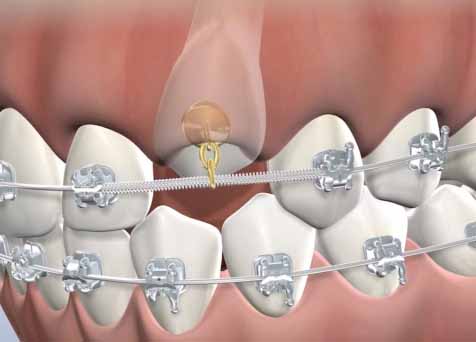
Photo courtesy of Manhattan Oral Surgery & Implant Center
If the canine needs help to erupt, an orthodontist can gently expose the crown and bond a bracket to it. A small chain attaches to orthodontic appliances, and your orthodontist shortens the chain as the tooth moves into its correct position. Most cases take about a year to complete.
Brian LeSage, DDS, an accredited fellow of cosmetic dentistry in Beverly Hills, sponsors this post.